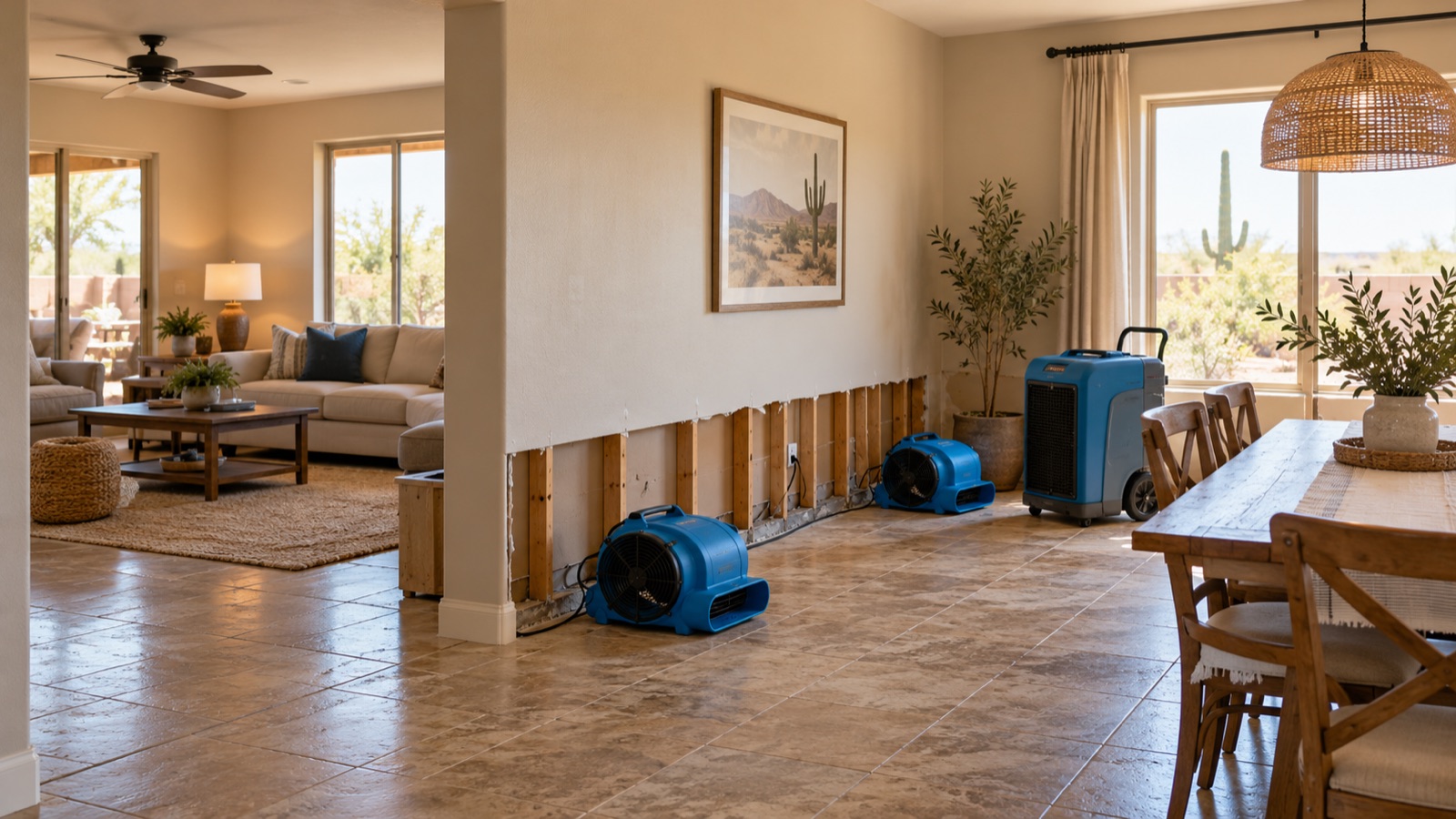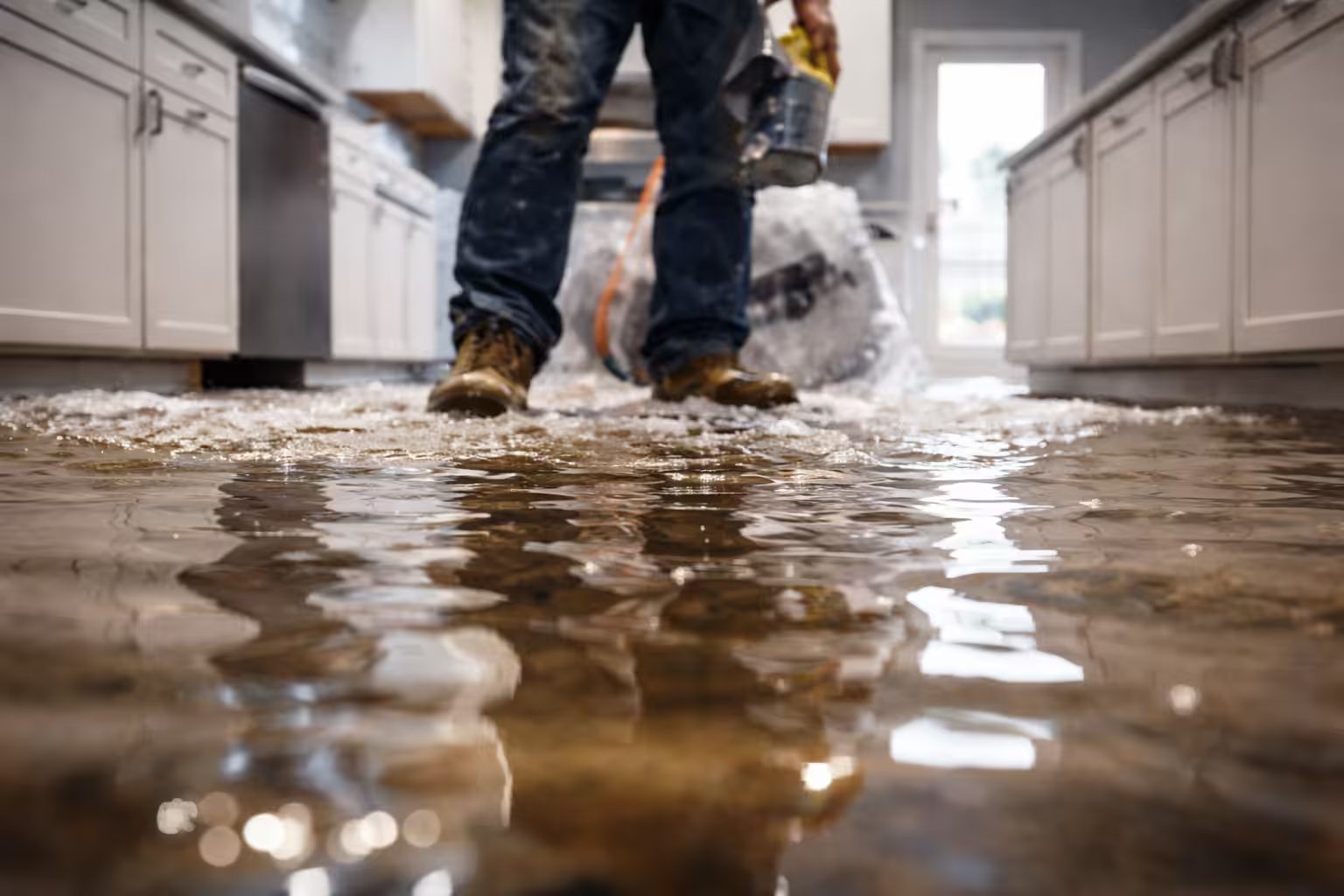
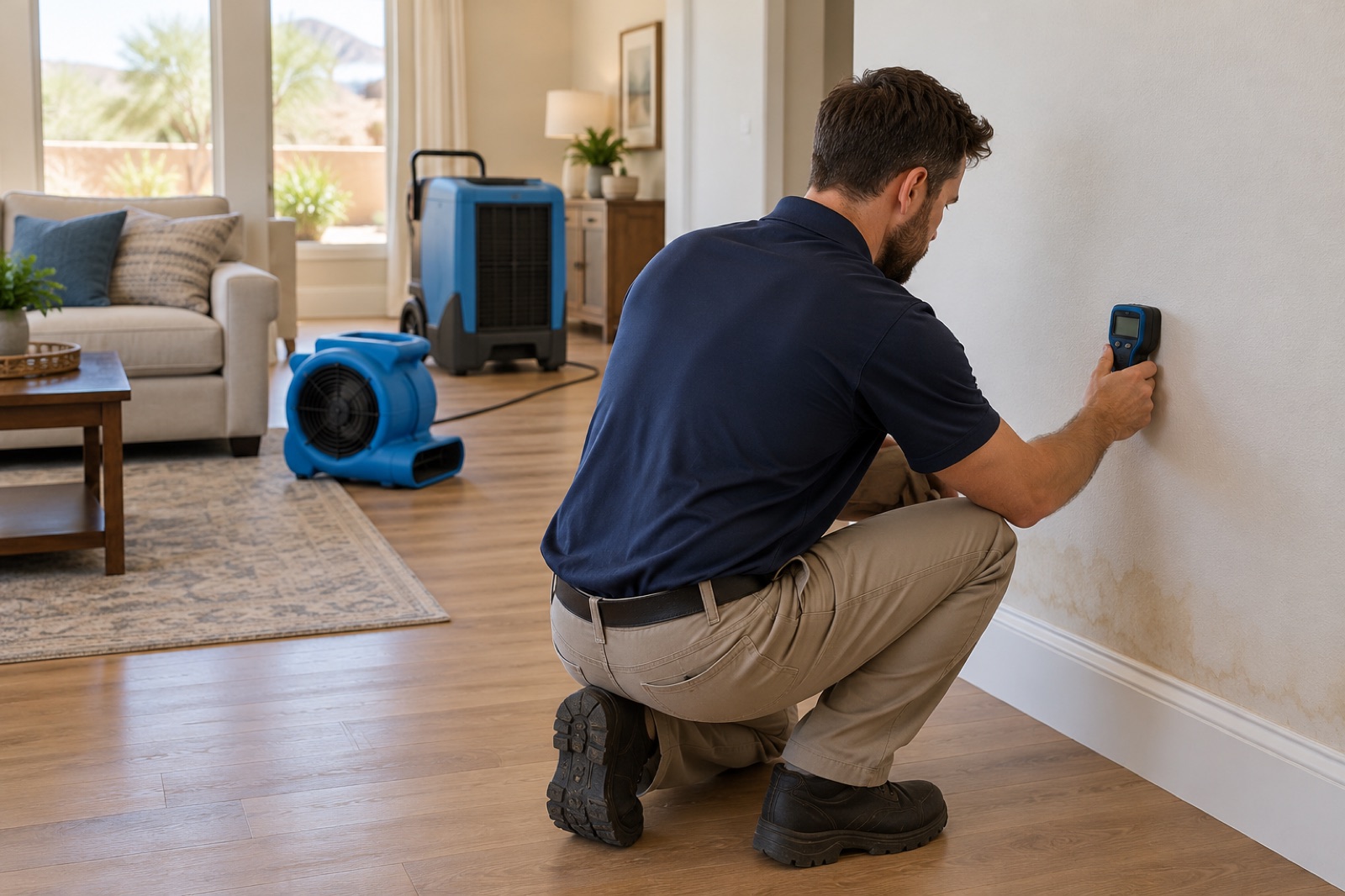
The leak has stopped. Drying equipment is running. Now you’re looking at the walls, flooring, and cabinets, wondering how much of your home is about to be torn apart.
Does getting wet automatically mean something needs to be removed?
Not always.
Some affected materials can be professionally dried and preserved. Others need removal because of contamination, damage, access limitations, or the way they respond to drying.
At National First Response, the goal is to save what can appropriately be saved and explain what needs to go. That decision begins with an assessment, continues through monitoring, and should be supported by documented conditions before the drying work is considered complete.
What Does “Dry-In-Place” Actually Mean?
Dry-In-Place means evaluating whether water-affected building materials can remain while they are professionally dried.
It is a process, not a particular machine. Equipment plays a role, but so do the initial inspection, moisture readings, adjustments, and final verification.
Think of preservation as a working plan. The team may initially determine that a material is a reasonable candidate for drying in place. Later readings help establish whether that approach is working or needs to change.
The decision can differ across the same property. Some materials may remain while others require selective removal.
As part of our water damage restoration services, we assess affected areas and monitor drying progress so those decisions follow the conditions found at your property.
How Does the Team Decide What Can Stay?
The first question is whether the conditions support preservation.
The team considers the affected materials, their physical condition, contamination concerns, access to moisture, occupant safety, and whether a controlled drying environment can be established. Addressing the water source and identifying hazards also belong in that assessment.
A material that looks intact may still have moisture concealed behind or beneath it. Another may be accessible for drying but too physically damaged to retain.
This is why appearance alone cannot settle the question.
The inspection gives the team a starting point. What happens during drying helps determine whether the original plan remains appropriate.
Moisture Readings Give the Work a Starting Point
Moisture mapping helps identify affected areas and establish the conditions the team will monitor.
Initial readings can include affected materials and appropriate unaffected reference areas. Follow-up readings then help show how conditions change over time.
You may hear the term dry goal. This is the comparison used to determine whether a monitored material has returned to an acceptable dry condition. The appropriate goal or reference depends on the material and project conditions.
One reading is a snapshot. A series of readings helps tell the story.
Is the material progressing toward the selected goal? Has improvement slowed? Is an area behaving differently from what the team expected?
Those are the questions monitoring helps answer.
Thermal imaging may also guide closer investigation by showing temperature patterns. However, a thermal image alone does not prove moisture content or confirm where the water originated. Identifying the source and tracking moisture are related tasks, but they are not interchangeable.
Why One Property Needs a Different Setup From Another
Two rooms can look similar and still need different drying approaches.
The affected materials, access, extent of moisture, and environmental conditions influence equipment selection and placement. Depending on the project, the setup may involve air movement, dehumidification, directed heat, cavity drying, filtration, or containment.
Not every project needs every tool.
The equipment should serve the drying plan, and the readings should help show how the materials are responding. If progress is insufficient, the team may need to adjust equipment, environmental controls, or access.
Having equipment running does not, by itself, establish that the affected materials are dry.
When Removal Is the Right Call
Preservation is valuable when the conditions support it. Sometimes, they do not.
Contamination, physical or structural damage, safety concerns, concealed moisture, limited access, or poor drying progress may require selective removal.
Selective removal means taking out material where the work is justified and authorized while protecting what can remain.
That decision may happen during the initial assessment or later in the drying process. If monitoring shows that an area is not responding as expected, the plan needs to account for that information.
Removing one affected material does not mean the entire preservation effort failed. It means the team is responding to what the property needs.
The purpose is to reach a supported restoration decision, whether that involves preserving material, removing it, or using both approaches in different areas.
What Could Preserving Materials Mean for You?
Removing building materials creates additional work. It can involve cutting, dust, debris, disturbed finishes, and reconstruction.
Where preservation is appropriate, drying materials in place may reduce some of that disruption. Fewer removed materials may also mean fewer areas that need rebuilding afterward.
That can matter in a family home, an occupied apartment property, or a business trying to manage the effect of water damage.
However, the benefit depends on the specific loss. Preserving materials does not guarantee a lower total bill, a particular completion date, or an insurance outcome. Coverage, deductibles, and payment decisions remain separate from the technical decision about what can stay.
How Do You Know the Drying Is Finished?
A room looking better is encouraging. It is not the same as verifying the monitored materials have reached an acceptable dry condition.
The completion decision should draw on final readings and the drying record. Depending on the project, that record may include moisture maps, material and atmospheric readings, equipment information, photographs, visit notes, and final verification.
Together, those records help explain what was monitored, how conditions changed, and what supports completion.
The useful questions are straightforward: Which materials were checked? What do the final readings show? How do they compare with the selected dry goal or appropriate reference?
Equipment pickup should follow the evidence. It should not be the only explanation you receive.
Drying Complete Does Not Always Mean Repairs Complete
Once drying is verified, other work may remain.
Materials that were removed may need replacement. Finishes may need repair. Reconstruction may still need to be scheduled.
A clear handoff separates those stages. You should understand what was preserved, what was removed, what the final drying review supports, and what happens next.
You should also receive progress explanations during the work. If the approach changes, the reason should connect to the findings. If another visit is needed, you should know what the team expects to evaluate.
You have enough uncertainty after property damage. Understanding the plan should not add to it.
Get a Clear Answer About Your Property
You should not have to assume that every wet wall or floor will be removed. You also deserve an assessment before anyone promises it can all stay.
Contact National First Response to discuss your water damage and the next steps for evaluating the affected areas.
Our approach is to assess the conditions, explain the work, monitor progress, and document the decisions.
The right call starts with your property and follows the evidence through completion.
Frequently Asked Questions
Can wet drywall or flooring be dried without removal?
Sometimes. The decision depends on the material, its condition, contamination concerns, access to moisture, and drying progress. Some materials may be suitable for preservation while others require selective removal. An assessment is needed before determining the appropriate approach.
How long does drying in place take?
There is no single timeline that fits every property. Materials, moisture levels, access, environmental conditions, and measured progress all affect duration. The team should explain the expected next steps and update the plan as monitoring provides more information.
Can the drying plan change after work begins?
Yes. Initial findings establish a direction, while follow-up readings help determine whether it remains appropriate. Limited progress or newly identified concerns may lead to equipment adjustments, changes in access, or selective removal.
How do I know when drying is complete?
Ask the team to explain the final readings, the selected dry goal or reference, and which materials were included in verification. The handoff should also identify any remaining repairs. Equipment removal alone does not explain the completion decision.
Dealing with damage right now?
Get certified help onsite within the hour.
Call National First Response 24/7: we stop the damage, document everything, and bill your insurance directly.