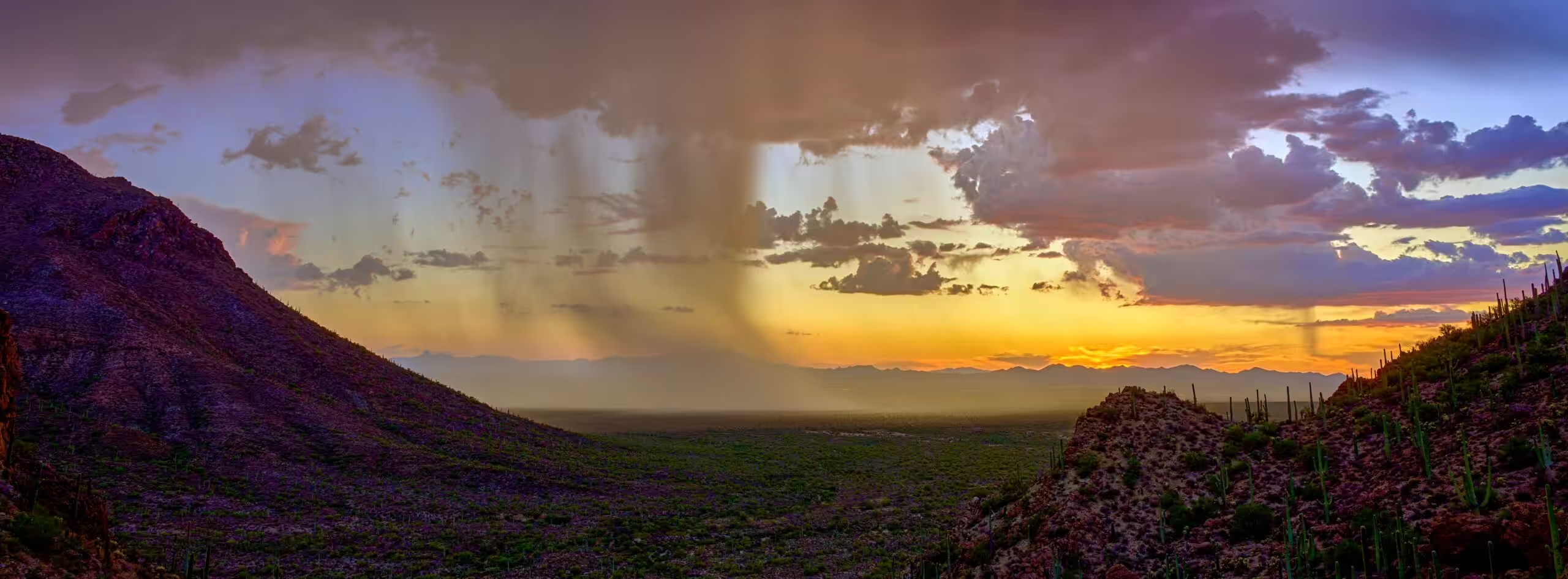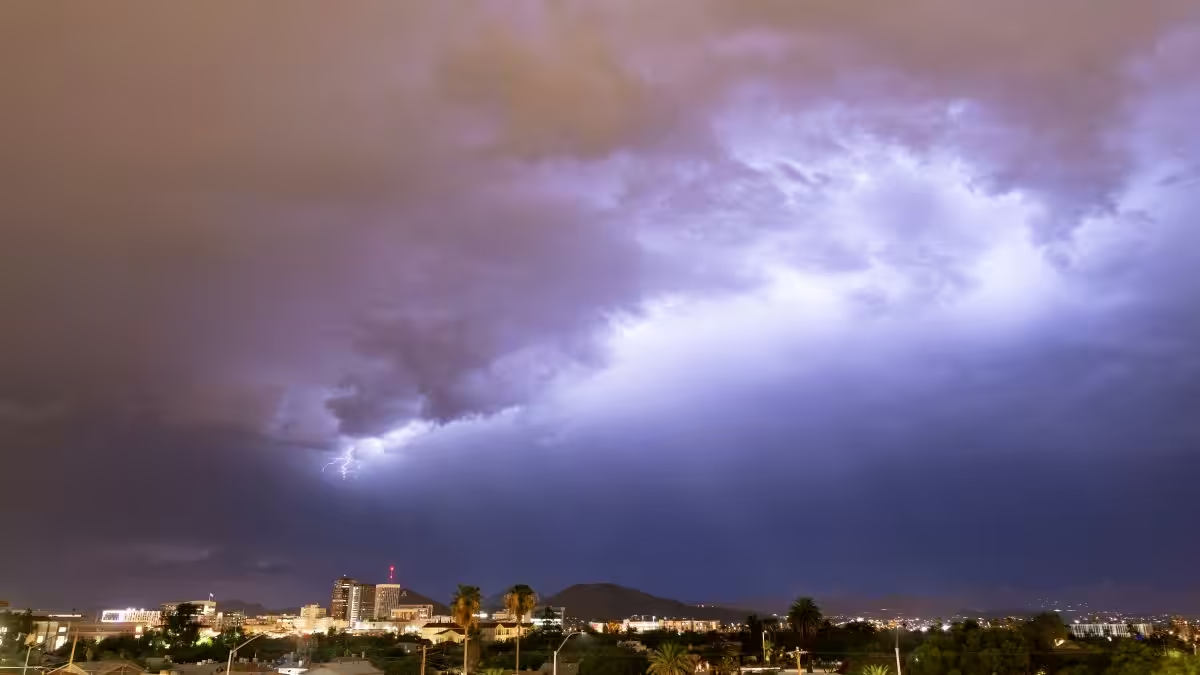
Monsoon season in Arizona is unpredictable by nature. One part of the Valley takes a direct hit while a neighborhood two miles away barely sees rain. When a fast-moving cell does land on your street, the damage is rarely limited to the roof.
What happens in the first day usually decides whether this is a drying job or a reconstruction job.
What monsoon damage actually looks like
Wind lifts tile and exposes the underlayment. Rain then finds the opening. The signs a homeowner can see are usually these:
- Staining that spreads outward on a ceiling rather than staying a fixed spot
- Bubbling or sagging paint, which means water is pooling above the surface
- A musty smell in a closet or hallway that was not there before the storm
What to do in the first 24 hours
- Photograph everything before you move it. Adjusters ask what the room looked like before cleanup began.
- Move furniture and rugs off wet flooring so the water has nothing else to travel into.
- Do not open the ceiling yourself. Pooled water can come down all at once.
If water is still coming in
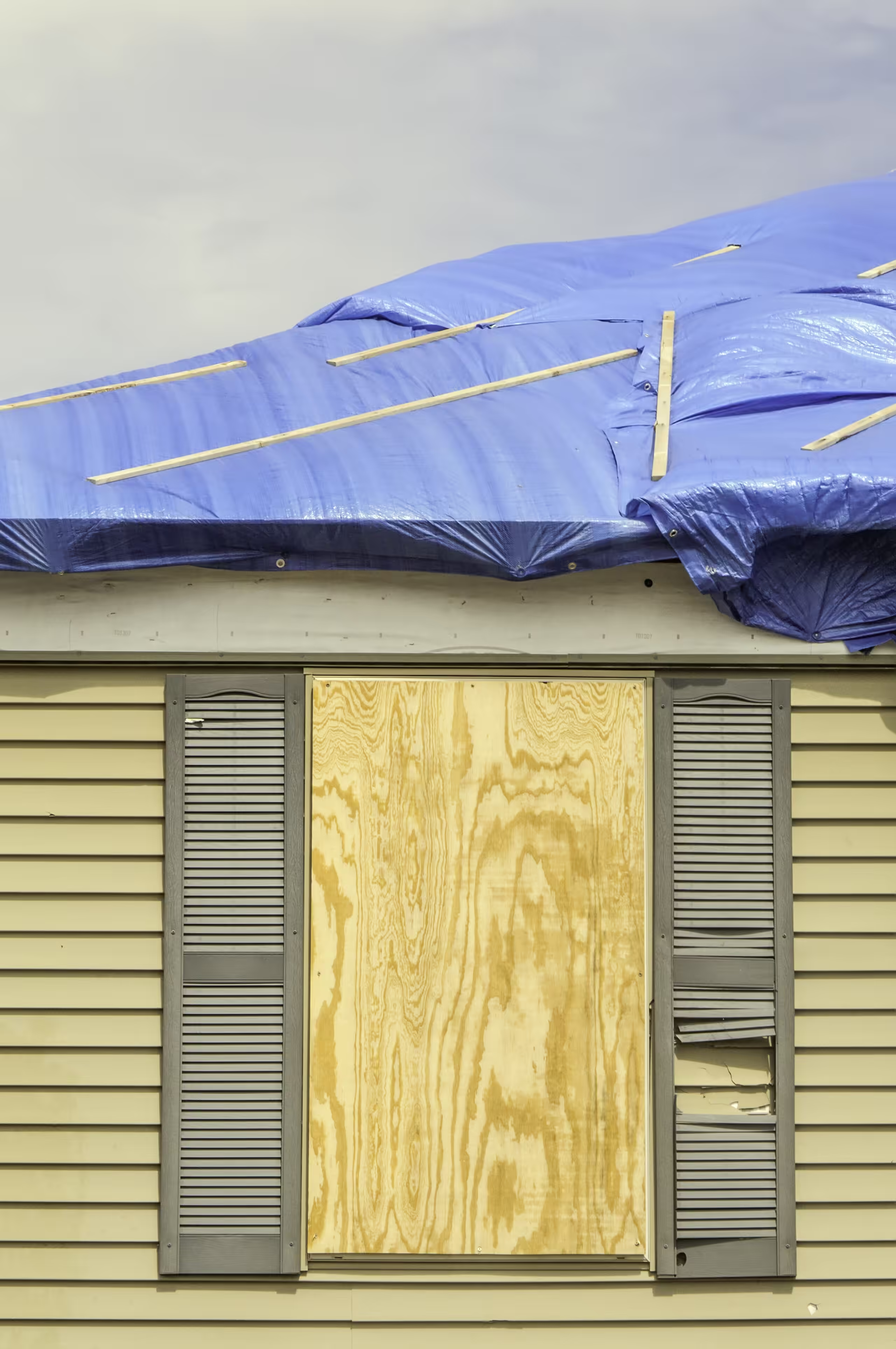
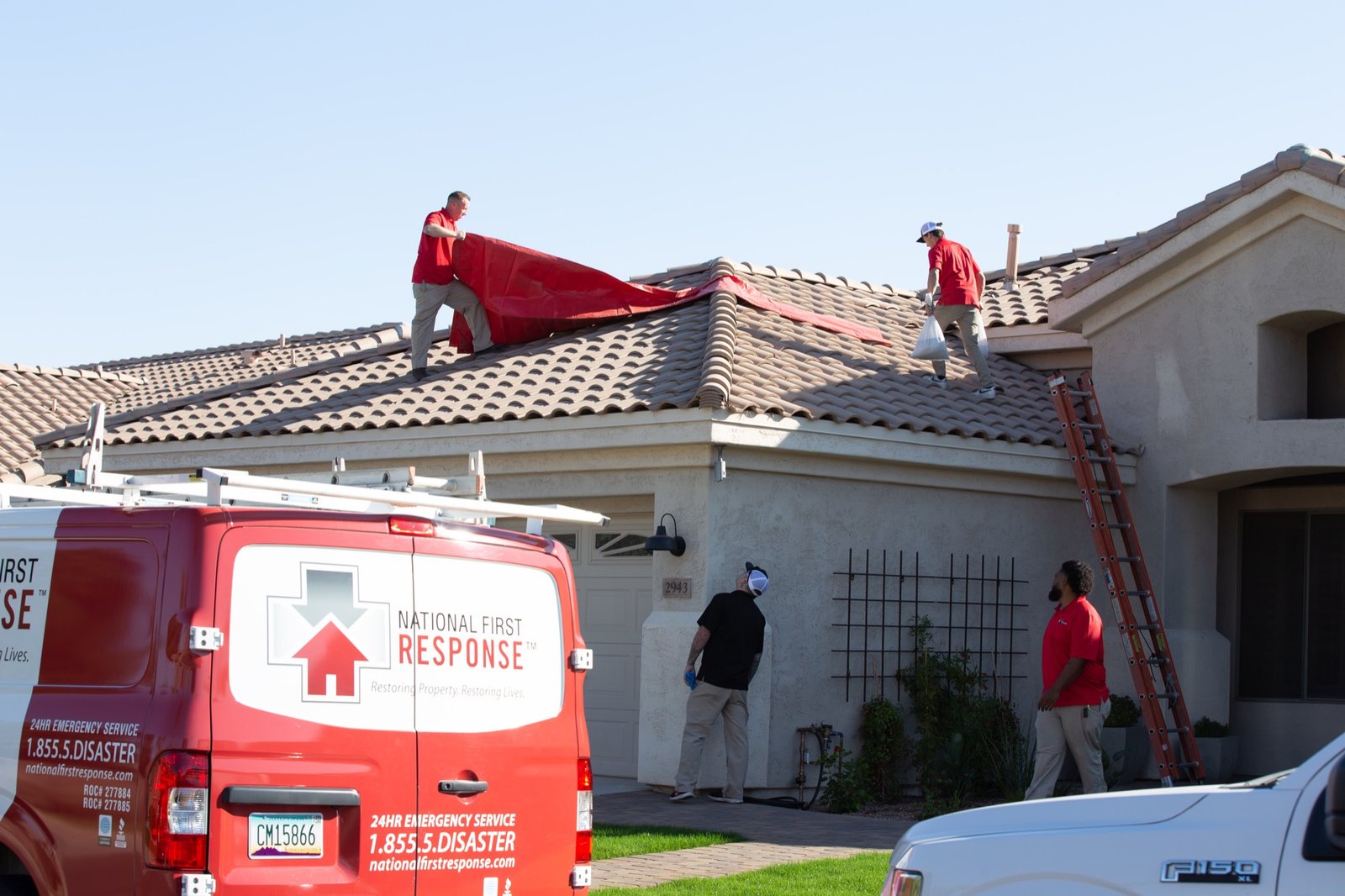
A tarp is a temporary measure, not a repair, and it belongs on the roof only when conditions are safe. If the storm is still active, stay inside and contact our response team instead of climbing up to look.
The homes that come through a monsoon well are almost always the ones where somebody started drying within the first day.
When to call for help
If water reached drywall, insulation, or flooring, the clock matters more than the square footage. Mold needs very little time in an Arizona summer. Call 480-405-5596 and we will tell you honestly whether this needs a crew or whether you can dry it yourself. Sometimes the right call is no claim at all.
Dealing with damage right now?
Get certified help onsite within the hour.
Call National First Response 24/7: we stop the damage, document everything, and bill your insurance directly.